A Boxing Workout for Beginners at Home
Quick Answer: A boxing workout for beginners at home needs no equipment: learn four punches (jab, cross, hook, uppercut), then work 3-minute rounds with 1 minute of rest, alternating shadowboxing rounds with bodyweight rounds. Start with 4–6 rounds, 3 days a week, and add a round every week or two. That’s 20–30 minutes and a genuinely full-body session.
The first time you throw a real cross — hips turning, back heel pivoting, the punch arriving from the floor instead of the shoulder — something clicks that a treadmill has never once given anyone.
Boxing is also the rare workout where the fun is the point and the fitness is the side effect. No gym, no sparring partner, no one watching you miss.

What are the basic punches you need to learn first?
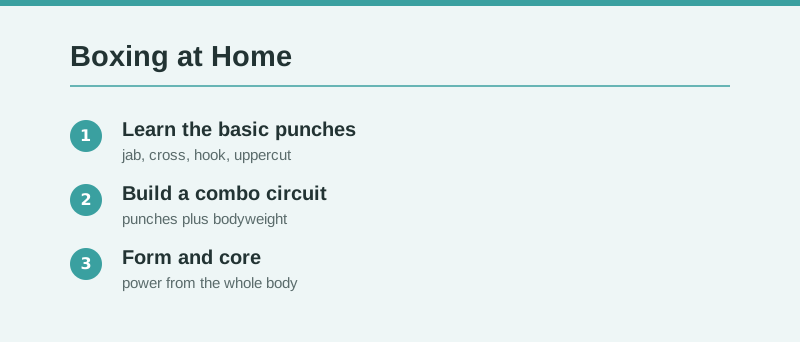
Four, and they’re the entire alphabet.
- Jab (1) — a quick straight punch with your lead hand. Fast, not heavy; it sets everything else up.
- Cross (2) — a straight punch with your rear hand. This is your power punch, and it comes from rotating your back foot and hips, not from your arm.
- Hook (3) — a curved punch that travels sideways, elbow up at roughly 90 degrees, turning on the lead foot.
- Uppercut (4) — an upward punch from below, driven by a slight dip and a leg drive.
Before any of it: your stance. Feet about shoulder-width, lead foot forward, weight balanced, hands up at cheek height, chin tucked, elbows in. Spend a full session just moving in stance and throwing jabs. It feels like you’re not working out. You are — and it’s what protects your wrists and shoulders once you start throwing hard.
Keep your fist loose until impact and snap punches back to your guard. A punch that stays out is a punch you’re not ready to follow.
What does a beginner boxing training plan look like?
Work in rounds, exactly like the sport does: 3 minutes on, 1 minute rest. Set a timer and let it run the session — this alone makes at-home boxing feel real.
The 6-round beginner workout (about 24 minutes):
| Round | Work |
|---|---|
| 1 | Warm-up: stance, footwork, light jabs |
| 2 | Shadowboxing — jab, cross, jab-cross |
| 3 | Bodyweight — squats, 20s jumping jacks, repeat |
| 4 | Shadowboxing — add the hook: jab-cross-hook |
| 5 | Bodyweight — push-ups (knees fine), plank, lunges |
| 6 | Free rounds: combos at your own pace, then cool down |
Combos to build from, in order: 1-2 (jab-cross), 1-1-2, 1-2-3 (add the hook), 1-2-3-2. Four combos is genuinely enough for months.
Run this 3 days a week with a rest day between. Add one round every week or two, or shorten rest to 45 seconds once 6 rounds feels manageable.
How do you throw with good form instead of just flailing?
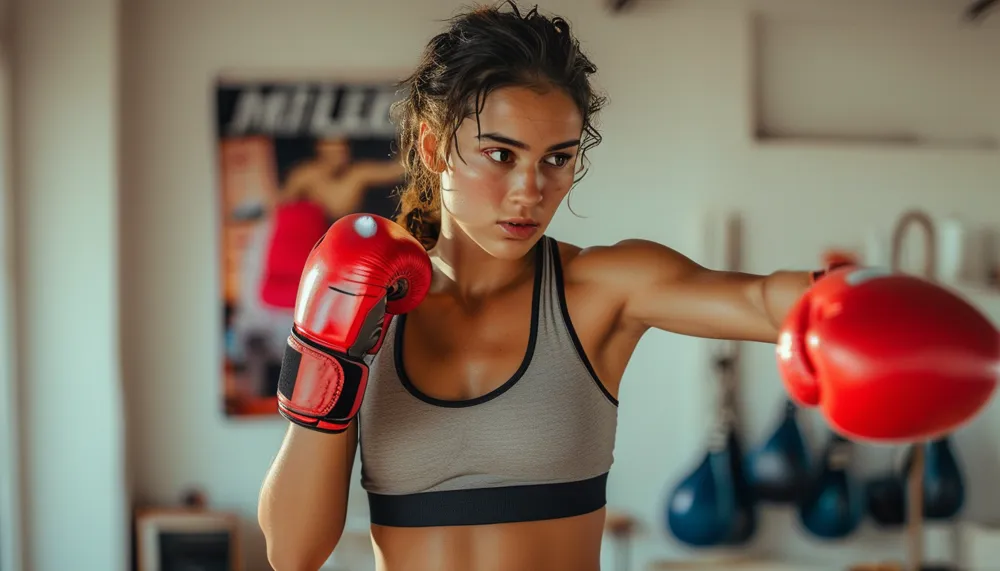
Power in boxing travels up: floor → back foot pivot → hip rotation → core → fist. Your arm is the last and smallest contributor, which is why big arms don’t make big punches and why tired arms don’t mean a good session.
Three cues that fix most beginner form at once:
- Stay light on the balls of your feet — small steps, never crossing your feet.
- Keep your core braced so rotation actually transfers instead of leaking through your ribs.
- Throw with control, then return. Every punch comes back to your face. Full extension without locking out your elbow.
Ten controlled punches beat sixty wild ones, and after a month the difference in how you feel afterward is dramatic.
Why does boxing work so well as stress relief?
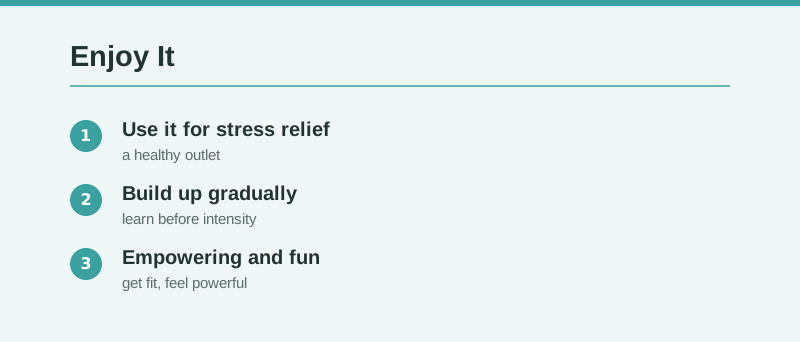
Because hitting something is an unusually direct outlet, and the round structure gives frustration somewhere to go on a schedule.
Put on music that fires you up. Let round 4 be loud. The physical result is a sweaty full-body session; the honest result is that most people finish clearer-headed than almost any other workout leaves them. That’s a legitimate reason to train, and it’s the reason people stick with boxing after the novelty wears off.
5 Mistakes Everyone Makes Starting Boxing at Home
- Dropping the rear hand. The most universal beginner habit. Your non-punching hand stays glued to your cheek — film 30 seconds on your phone and you’ll catch it instantly.
- Punching from the arm only. No hip rotation, no back-foot pivot. You’ll be exhausted and sore in the shoulders with nothing to show for it.
- Going too hard on day one. Boxing is intense, and the calves and shoulders you didn’t know you had will file a complaint. Start at 4–6 rounds even if you’re fit.
- Hitting a heavy bag without wraps. If you graduate to a bag, wrap your hands. Wrists are the injury that actually ends beginner boxing.
- Adding speed before form. The third mistake surprises even trainers when they see it in adults: people chase speed for weeks and then have to unlearn everything. Slow, correct, then fast.
Mini FAQ
Can you really learn boxing at home for fitness?
For fitness, absolutely — shadowboxing, combos and round conditioning need nothing but space and a timer, and they deliver the cardio and coordination benefits fully. What home training can’t teach is reacting to an opponent, so if you eventually want to spar, add coached sessions. Most people never need to.
How long until I see results from a beginner boxing program?
Coordination improves within 2–3 weeks — the rope-and-tangle phase of combos smooths out fast. Conditioning changes show up around week 4–6 with three sessions a week. Visible body composition change depends far more on total activity and nutrition than on boxing specifically.
Do I need gloves or a bag to start?
No. Shadowboxing requires nothing. If you want equipment later, hand wraps (~$10) come before gloves, and gloves come before a bag. Plenty of people train for six months on air and never feel short-changed.
TL;DR:
- Learn stance first, then jab, cross, hook, uppercut.
- Work 3 min on / 1 min rest, 6 rounds, alternating shadowboxing and bodyweight.
- Build 4 combos: 1-2, 1-1-2, 1-2-3, 1-2-3-2.
- Power comes from the floor and hips, not the arms.
- 3 sessions a week; add a round every week or two.
- Wrap your hands before you ever touch a bag.
Learn the punches, start the timer, and find out how fast a beginner boxing habit turns into real confidence.
Keep Reading
This article is for general informational and styling purposes only. Fit, sizing, and product availability may vary.