Women's Boxing: Why Every Woman Should Try It (At Least Once)
Quick Answer: Boxing is a full-body workout that trains cardio, strength, coordination, and stress relief at once — power comes from the legs and hips, not the arms. Start with a beginner or fitness boxing class, bring hand wraps, and expect to be uncoordinated for the first three sessions. No, it won’t make you bulky.
There’s a very specific satisfaction in hitting a heavy bag after a long day. A treadmill has never once offered it and never will.
Boxing has quietly become one of the most popular workouts among women, and the reasons hold up under scrutiny — which is not something you can say about every fitness trend.
Is Boxing a Good Full-Body Workout?
Yes, and more thoroughly than it looks from outside.
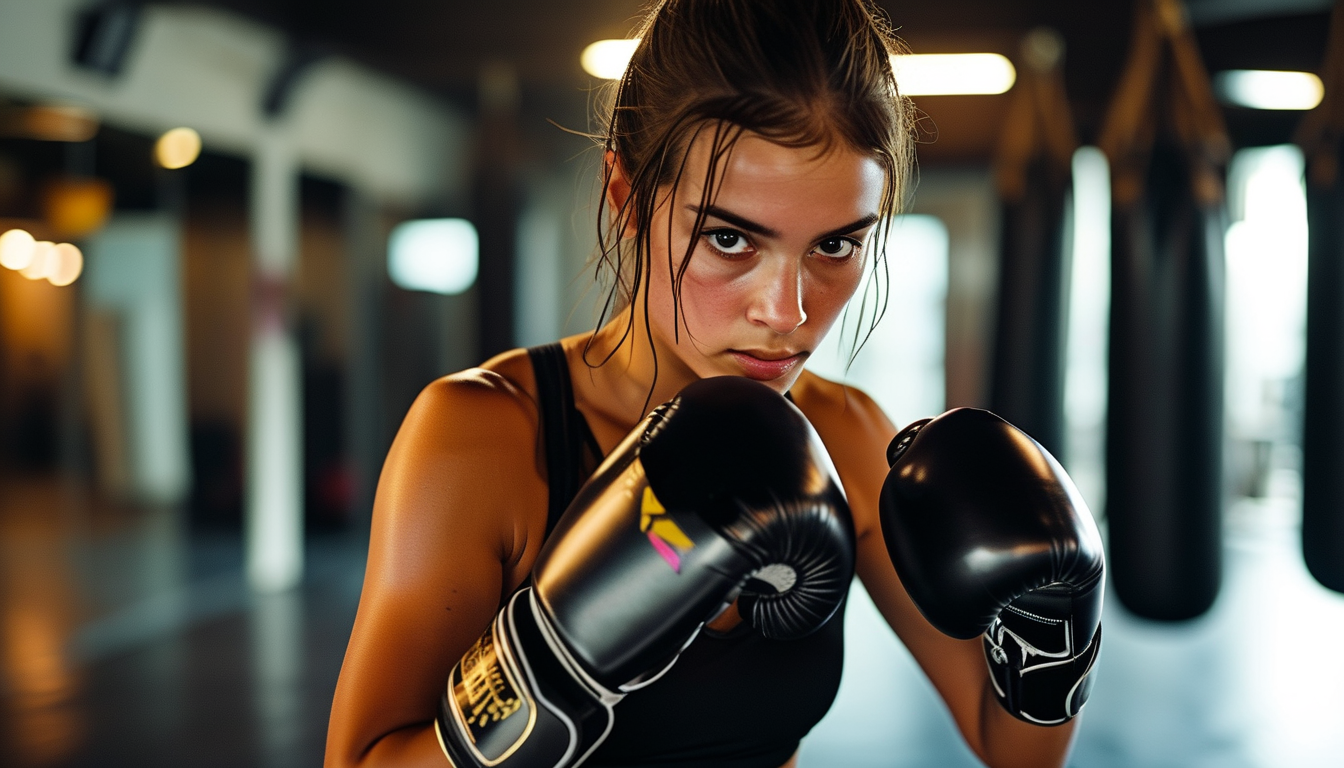
Boxing appears to be an arms activity. It isn’t. Power in a punch is generated from the ground up — you drive from the rear foot, rotate through the hips, transfer through a braced core, and the arm is essentially the delivery mechanism at the end of a chain. Which means every punch is a lower-body and core movement wearing gloves.
Then there’s the conditioning load. A boxing class typically runs 3-minute work rounds with 60-second rests, which is interval training whether it’s labeled that way or not. Heart rates commonly sit in the 70–85% of maximum range during working rounds. An hour of bag work and pad drills is a genuinely serious cardiovascular session.
And it trains things most gym workouts never touch: reaction time, hand-eye coordination, footwork, and rotational power. It’s brutally efficient for the hour it takes.
Why Do Women Love Boxing?
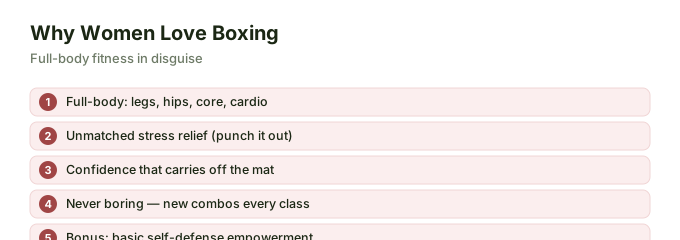
1. The stress relief is different in kind
Not just “exercise helps mood,” though that’s true. There’s something specific about controlled aggressive output against a target that produces a release other workouts don’t. People describe it as clearing rather than tiring. It’s therapy with hand wraps.
2. The confidence carries over
Learning to throw a proper cross — and knowing that you can — changes something about how you move through a room. It’s not about wanting to fight anyone. It’s about the quiet difference between believing you’re capable and knowing it.
3. It genuinely doesn’t get boring
New combinations, new drills, an actual skill that improves measurably. Boxing engages your brain in a way a stationary bike doesn’t, and that’s a large part of why adherence tends to be high compared to workouts people abandon in March.
4. Basic self-defense, as a byproduct
Not the point, and no class makes you safe on its own. But knowing the fundamentals of stance, distance, and how to throw a punch is a real thing to have.
Myth vs. Fact
Myth: Boxing will make me bulky. Fact: Boxing training is predominantly conditioning and skill work with very little heavy resistance load. It builds lean muscle and cardiovascular fitness — the sport’s own athletes cut to make weight classes, which tells you something about the direction it moves people.
Myth: I’m not coordinated enough. Fact: Everyone is bad in week one. Coordination is the thing being trained, not a prerequisite for showing up. Give it three sessions before you judge yourself.
Myth: It’s too aggressive for me. Fact: Fitness boxing classes involve no contact with another person at all — you’re hitting bags and pads. Sparring is optional, separate, and never a default in beginner classes.
Myth: You need to be fit before you start. Fact: Beginner classes are structured for beginners, and you can drop the intensity in any round. The instructor has taught people in worse shape than you, probably this week.
How Do You Start Boxing as a Beginner?
Find the right class. Look for “beginner boxing,” “boxing fundamentals,” or “fitness boxing.” Ask whether there’s any contact — most fitness-oriented classes have none. Tell them it’s your first time; good gyms will walk you through stance before the class starts.
Bring or buy hand wraps. These are non-negotiable and cost about $10. They stabilize the wrist and the small bones of the hand, and going without is how beginners get hurt. Most gyms lend gloves; almost none lend wraps.
What to wear: squat-proof leggings or shorts you can pivot in, a supportive high-impact bra, and clean cross-training shoes with a flat, pivot-friendly sole. Running shoes with a soft, high heel are the wrong tool — you need to rotate on the ball of your foot without the shoe fighting you.
What to expect in session one: stance, guard, jab, cross. That’s it. You’ll be tired in ways you didn’t predict, and your shoulders will be sore in the morning. Expect three sessions before it stops feeling awkward — that’s the standard adjustment, not a sign you’re unsuited to it.

FAQ
Do I need my own gloves to start boxing?
Most gyms have loaner gloves for beginners, so hand wraps are the only thing you truly need to bring for your first few sessions. If you stick with it past a month, 12–14 oz gloves for a woman are a standard starting size and worth buying for hygiene alone.
How many calories does boxing burn?
An hour of boxing training typically burns in the range of 500–800 calories depending on bodyweight and intensity, which places it toward the higher end of group fitness formats. The interval structure also means elevated energy expenditure continues for a while after the session.
Is boxing bad for your wrists or hands?
It’s safe when you wrap properly, land punches with a straight wrist and the first two knuckles, and don’t hit the bag harder than your technique supports. Wrist pain in beginners almost always traces to poor wrapping or a collapsing wrist on impact — both fixable in one coaching conversation, and both worth fixing early.
General fitness information, not medical advice. If you’re pregnant, have a wrist, shoulder, or back injury, or are managing a health condition, check with your doctor before starting.
TL;DR:
- Punching power comes from legs, hips, and core — boxing is a full-body workout that looks like an arm workout
- The 3-minute round / 1-minute rest structure is interval training, with working heart rates around 70–85% of max
- It trains reaction time, coordination, and rotational power that most gym workouts never touch
- Fitness boxing classes involve zero contact with another person; sparring is separate and optional
- Bring hand wraps ($10, non-negotiable), wear flat pivot-friendly shoes, and give it three sessions
See It in Motion
Seen here: High Waist Yoga Leggings with Side Pockets — shop it on bubblelime.com
Keep Reading
This article is for general informational and styling purposes only. Fit, sizing, and product availability may vary.