Fighting Shape: The Boxing Conditioning That Builds Real Round Fitness
Quick Answer: To get in boxing shape, train in 3-minute rounds with 1 minute of rest rather than steady-state cardio. A workable week: 2 bag or shadowbox days (5–8 rounds), 1–2 bodyweight circuit days, and walking as your base. The rest minute is a skill, not a collapse — nasal breathing with long exhales, hands on knees, one sentence of self-review. And the last 30 seconds of every round is where fighting shape is actually built.
There is a specific kind of fitness that jogging cannot produce. You see it when someone who runs 10Ks does their first bag round and is wrecked at ninety seconds.
Boxing conditioning has a shape — three on, one off — and training inside that shape builds something steady-state cardio can’t fake: the ability to work hard, recover incompletely, and go again.

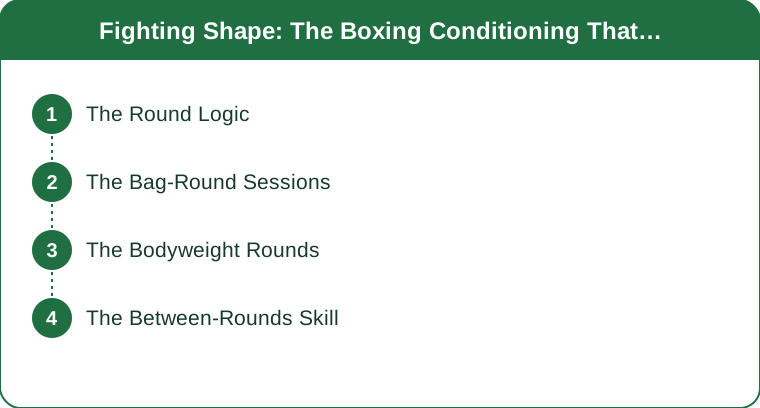
Why does the 3-minute round build fitness that jogging doesn’t?
It’s a built-in interval protocol. Three minutes is long enough to demand pacing — you can’t sprint it — and one minute is short enough that recovery stays deliberately incomplete. That combination sits in the conditioning sweet spot, and boxing arrived at it a century before anyone called it HIIT.
It teaches pacing viscerally. A round that starts too hot dies at ninety seconds, and no amount of theory teaches effort distribution like being on minute two of a round you opened too fast. Twice.
It builds the mental layer. The last thirty seconds of each round is where fighting shape actually lives — the point where the honest options are “coast” or “finish.” Choosing to finish, repeatedly, is a habit that transfers well outside the gym.
And it scales cleanly. Beginners run 2-minute rounds with 90-second rests; advanced work is 5 × 3 minutes with 60. Same structure, different dial. A free round-timer app runs the whole system, and you should have one before you have gloves.
What do the bag rounds look like?
Five session types. Rotate them; don’t do the same one every week.
The pyramid session — skill under fatigue, in five rounds:
- Jab only, constant movement
- Jab and cross
- Full combinations (1-2-3, 1-2-3-2)
- Power emphasis, fewer punches, more intent
- Everything, while tired — this is the round that matters
Output rounds. A volume game: steady combinations for 2:30, then an all-out burst for the final 30 seconds. The bag doesn’t let you lie about output, which is exactly the point.
Movement-emphasis rounds. Footwork-heavy rounds woven between power rounds — circling the bag, in and out, pivoting off after every combination. Boxing is legs first, and this is where that gets trained.
The form floor. One rule that overrides everything: technique never trades for output. Sloppy punches when tired build bad reflexes and sore wrists. If your form breaks, drop the pace or stop — crisp or rest, nothing in between. This is the single most-ignored rule in fitness boxing and the reason so many people’s wrists hurt.
No bag? No problem. Every one of these sessions is shadowbox-able — the shadowboxing version costs nothing, works in an apartment, and is what pros do anyway. Resistance bands anchored behind you add load without equipment.

What about the bodyweight conditioning days?
Same structure — 3 minutes on, 1 off — applied to general conditioning.
The fighter circuit. Rotate stations inside each 3-minute round, 30 seconds each: burpees, squats, push-ups, mountain climbers, plank. Four rounds is a complete session and takes 16 minutes.
Core-emphasis rounds. A punch is a core exercise wearing a glove — the power comes from rotation. Medicine-ball twists, bicycle crunches, plank rotations, dead bugs. Rotational strength is what turns arm-punching into real punching.
Legs rounds. The bouncing boxing stance taxes calves relentlessly, and beginners are always surprised by this. Squats, walking lunges, calf raises, wall sits. Footwork stamina is leg endurance, not skill.
Jump rope. The boxer’s cardio staple for a reason: rhythm, calves and timing in one tool. Three-minute rope rounds, and the tripping-and-restarting is part of the tradition — everyone does it, including the professionals.
The weekly shape:
| Day | Session |
|---|---|
| Mon | Bag / shadowbox — pyramid, 5 rounds |
| Tue | Fighter circuit, 4 rounds |
| Wed | Walk or rest |
| Thu | Bag / shadowbox — output + movement, 6 rounds |
| Fri | Core and legs circuit, 4 rounds |
| Sat/Sun | Rope rounds or a long walk |
Four training days that fit around a real life, and roughly 20 minutes each.
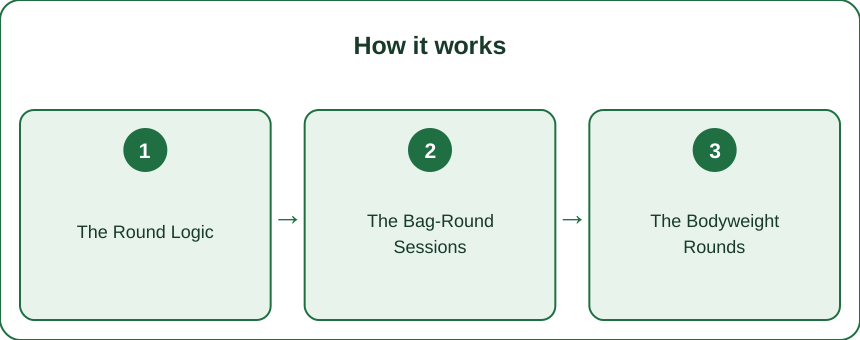
How do you recover between rounds properly?
This is the part almost everyone wastes, and it’s genuinely trainable.
Work the rest minute. Deep nasal breathing, shoulders shaken loose, one sip of water. Recovery is an active skill, not a collapse into a wall.
Emphasize the exhale. Breathe in through the nose for about 3 seconds, out for 6. The long exhale is a physiological brake on heart rate — put a monitor on and you can watch it drop. Four or five of these cycles does most of the work of the minute.
Put your hands on your knees. The corner-stool posture is not a sign of weakness; research on recovery positions supports the hands-on-knees position over standing tall with hands behind your head. Looking tough costs you recovery. Retire the tax.
Use ten seconds for self-talk. One sentence reviewing the round (“hands dropped when tired”), one sentence setting the next round’s focus (“guard up, breathe out on every punch”). That’s the corner coach, internalized.
The transfer is the underrated part: composure under fatigue is a general-purpose skill. Stressful days borrow it. Fighting shape is half engine, half poise.
5 Mistakes Everyone Makes Getting in Boxing Shape
- Opening every round at 100%. You’ll die at 90 seconds and learn nothing. Start at 70% and finish at 100%.
- Standing tall during the rest minute. Hands on knees, long exhales, actually recover.
- Letting form degrade as the round goes on. This builds the exact reflexes you don’t want, and it’s how wrists get hurt.
- Skipping the leg and core work. Boxing conditioning that’s all arms plateaus fast — the engine is legs and rotation.
- Training five bag days a week. The third mistake is the most common, but this is the one that ends the program: shoulders and wrists need recovery. Two hard punching days plus circuits beats five mediocre ones.
Mini FAQ
How long does it take to get in fighting shape?
Noticeable conditioning change in 4–6 weeks at four sessions a week; a genuine ability to hold 6–8 hard rounds usually takes 3–4 months. The fastest early gains come from pacing and breathing rather than fitness — most beginners get significantly better inside three weeks simply by not starting each round too hot.
Do I need a heavy bag for boxing conditioning?
No. Shadowboxing rounds deliver the conditioning and the technique work, and they’re what professionals spend the most time on. A bag adds resistance, feedback and satisfaction — buy one when you’re sure you’re staying, and buy wraps and gloves before you use it.
Is boxing conditioning good for women’s fitness specifically?
It’s excellent, and the round structure is a large part of why — it builds cardiovascular fitness, rotational core strength and coordination simultaneously, with clear progress markers that aren’t about weight. It also requires almost no equipment, which makes it one of the easiest programs to actually keep.
TL;DR:
- Train in 3 min on / 1 min off rounds — the structure is the program.
- 2 bag or shadowbox days + 1–2 circuit days per week, ~20 min each.
- Rotate pyramid, output and movement-emphasis rounds.
- Form never trades for output — crisp or rest.
- Work the rest minute: nasal breathing, 3s in / 6s out, hands on knees.
- The last 30 seconds of every round is where the shape gets built.
Three minutes on, one minute of real recovery, finish every round strong.
Keep Reading
This article is for general informational and styling purposes only. Fit, sizing, and product availability may vary.