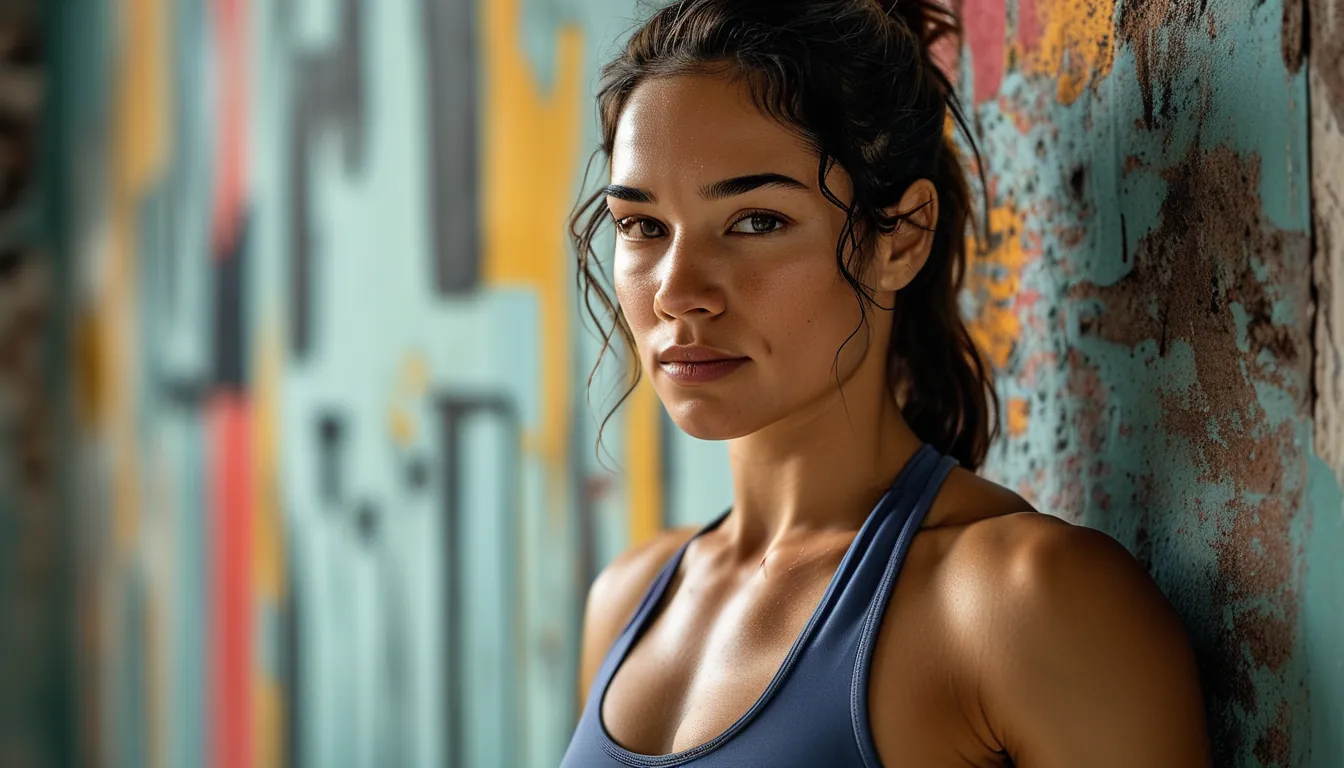
Why Boxing Workouts Are So Empowering for Women
Quick Answer: Boxing workouts build full-body strength, burn roughly 400–600 calories an hour, and deliver a stress release almost nothing else matches. For most women the bigger payoff is psychological: learning to throw a real punch builds a kind of confidence that carries well outside the gym. Start with a beginner class, wrap your hands, and focus on technique before power.
There’s something uniquely satisfying about throwing a good punch. Not a flail — a real one, where your feet, hips, and shoulder fire in sequence and the bag actually moves.
Boxing has exploded among women, and the full-body burn is only part of the reason. The rest is how you feel walking out: strong, capable, and slightly surprised at yourself.
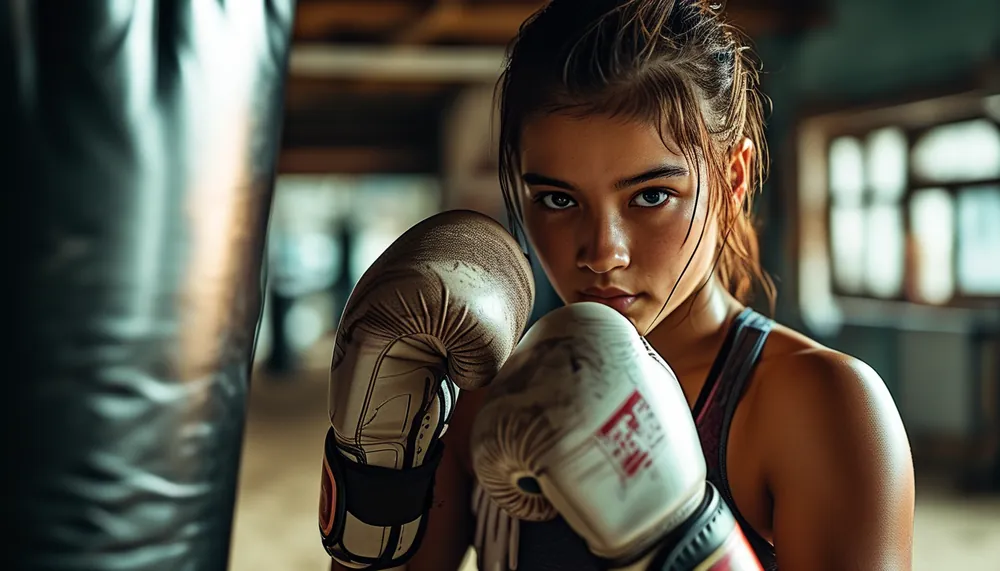
Why Is Boxing So Empowering for Women?
Most workouts ask you to endure something. Boxing asks you to do something — and then gives you immediate, physical feedback about whether you did it well.
That feedback loop is the whole thing. You can’t fake a good cross. When it lands right, you hear it. When your form is off, the bag tells you. Progress isn’t abstract or scale-based; it’s a sound and a feeling, and it changes week over week.
There’s also the simple fact of learning to hit. Many women reach adulthood having never thrown a punch with real intent. Discovering that you can — that there’s genuine force in your body — rearranges something. Gym owners will tell you the same story on repeat: people come for the workout and stay for the way it changes how they carry themselves.

What Does Boxing Actually Do for Your Body?
1. It builds real strength and power
Punches start at the floor. Your legs drive, your hips rotate, your core transfers the force, and your shoulder delivers it. A 45-minute bag session is a legitimate full-body workout — and one of the few that trains rotational power, which almost nothing else in a standard gym program touches.
2. It burns serious calories
A moderate-to-hard boxing session runs roughly 400–600 calories an hour for most women, and the interval structure — 3-minute rounds, 60 seconds rest — keeps your heart rate elevated in a way steady-state cardio doesn’t.
3. It’s an unmatched stress release
Few things process a bad day like hitting a heavy bag. It’s not a metaphor — it’s a physical outlet for tension that has nowhere else to go. Ask anyone who boxes what they do after a terrible week.
4. It sharpens focus and coordination
Combinations demand sequencing, timing, and attention. Learning a 1-2-3-slip takes concentration, and that concentration is the reason a boxing hour goes faster than any treadmill hour ever has.
5. It’s genuinely fun
The skill component matters. There’s always a next thing to learn, which is why boxing has a retention rate most fitness formats envy. You keep going because you want to get better, not because you’re supposed to.
5 Mistakes Everyone Makes When They Start Boxing
- Punching with the arm only. Power comes from rotation, not from the shoulder. If your arm is exhausted and the bag barely moves, you’re arm-punching. Turn the back foot; let the hip drive.
- Skipping hand wraps. Wraps aren’t decorative — they support the small bones of the hand and the wrist joint. A sprained wrist from an unwrapped session sidelines you for weeks.
- Locking the elbow at full extension. Snapping the arm straight repeatedly irritates the elbow. Extend to about 95 percent and pull it back fast.
- Holding your breath. Every punch gets a sharp exhale. Holding your breath through a combination is why you’re gassed 40 seconds into a 3-minute round.
- Going for power before form. The first month should be almost boring — stance, guard, straight punches. Power built on bad mechanics is a shoulder injury with a delay timer.
Number three is the one that shows up months later, long after people have stopped connecting it to how they were punching.
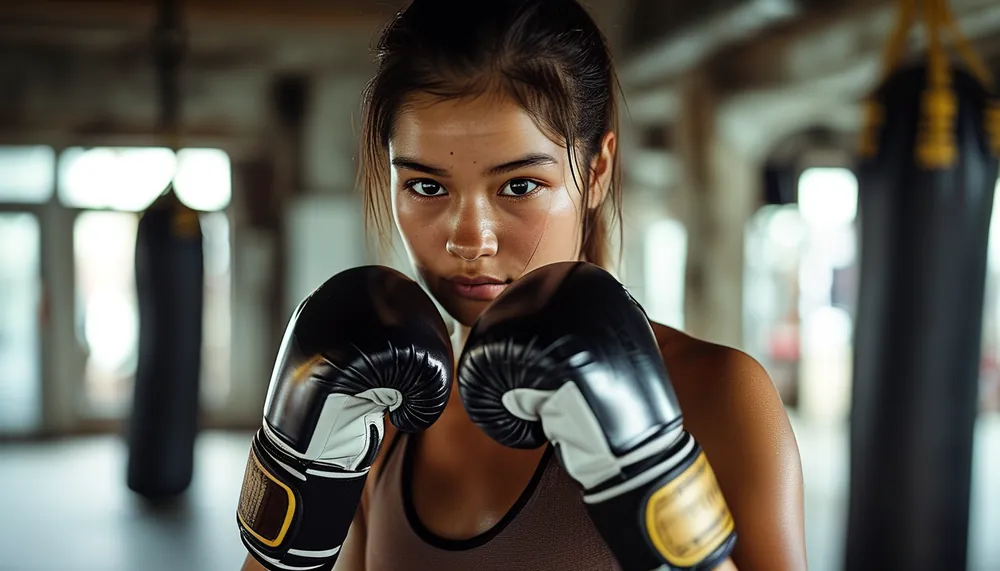
How Do You Start Boxing as a Beginner?
Find a beginner class or a boxing-inspired fitness session. A coach correcting your stance in week one saves you a year of ingrained habits. Technique-focused gyms are better than pure cardio-kickboxing classes if you want the skill.
Get your own wraps and gloves. Wraps are about $10. Gloves for bag work are usually 12–14 oz for most women. Loaner gloves at a gym are a damp public-health experiment; buy your own within the first month.
Train 2–3 times a week to start. Boxing is harder on the shoulders and wrists than it looks, and the connective tissue needs time to adapt.
Wear something that lets you rotate. You’ll be twisting through the torso constantly. A supportive sports bra and high waist leggings that stay put through pivots make more difference than any other gear decision.
Expect to be bad at it for six weeks. Everyone is. The coordination arrives suddenly, usually around session ten.
If you have a shoulder, wrist, or neck injury, or you’re pregnant, talk to a physiotherapist or your doctor before starting — boxing is adaptable, but the modifications are worth getting right up front.
FAQ
Do I need to spar to get the benefits of boxing?
No. The vast majority of women who box never take a punch. Bag work, pad work, and shadowboxing deliver the entire fitness and confidence payoff with zero contact.
How many calories does a boxing workout burn?
Roughly 400–600 per hour for most women, depending on intensity and body size. Interval-style classes with rounds land at the higher end of that range.
Will boxing make my shoulders or arms bulky?
No. Boxing training is high-repetition, low-load endurance work — it builds definition and shoulder endurance, not size. Most people notice their back and core change more than their arms.
TL;DR:
- Boxing is a genuine full-body workout, roughly 400–600 calories an hour
- The real draw is confidence: learning to throw a real punch changes how you carry yourself
- Power comes from the legs and hips, not the arm
- Always wrap your hands, and buy your own gloves
- Start with technique for the first month; power comes after
- 2–3 sessions a week is plenty to begin
This article is for general wellness purposes only and isn’t medical advice.
Keep Reading
This article is for general informational and styling purposes only. Fit, sizing, and product availability may vary.