Boxing Footwork: Drills That Turn Feet Into Assets
Quick Answer: Boxing footwork comes down to one movement — the step-drag: step with the foot closest to where you’re going, drag the other into place, never cross your feet. Drill it forward, back, left and right, then add the box-corners drill and 2-minute shadow rounds where only your feet matter. Fifteen minutes, three times a week, and both your punching power and your balance change noticeably inside a month.
Everyone falls in love with punches. Ask any coach what to fix first and they’ll point at the floor.
Power comes from the ground up. Defense is mostly not being where the punch is. Both of those live entirely in your feet — which is why the best-conditioned beginner with wild feet gets outworked by someone who just knows how to move.

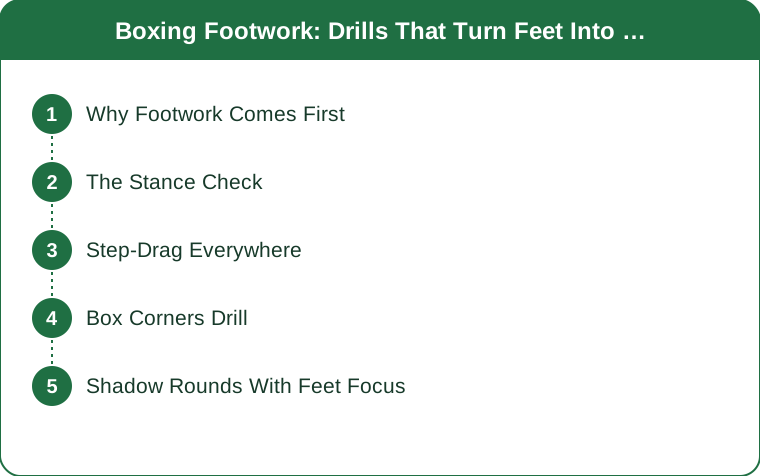
Why does footwork come before punching?
Three reasons, and they compound.
Power originates at the floor. A punch travels floor → rear foot pivot → hips → core → fist. If your feet are flat, tangled or crossed at the moment you throw, that chain has no anchor and the punch is arm-only. This is the whole reason “punch harder” advice usually fails — the problem is two feet below where people are looking.
Distance management is footwork. Boxing is decided by who controls the space between two people. Being half a step too close or too far is the difference between landing cleanly and eating a counter.
Balance is what lets you punch and then still exist. Off-balance means you can’t throw again, can’t defend, and can’t move off. Sloppy feet make every punch weaker and every reaction slower.
Nobody films their footwork for social media, which is exactly why it’s the fastest available advantage.
What’s the correct boxing stance?
This is home base — you return to it after every single movement.
- Feet a little wider than shoulder-width, staggered. Dominant foot back (left foot forward for right-handers).
- Weight on the balls of your feet, rear heel slightly lifted. You should feel spring-loaded, never flat-footed.
- Knees soft, weight roughly 50/50 between the feet.
- Hands up, elbows in, chin down.
The test: have someone give you a light nudge from any direction. If you wobble or have to step to recover, your base is too narrow or your weight is too high. Reset and try again.
Spend a full session just standing in it and moving. It feels like you’re not training. You are.

Drill 1: Step-drag everywhere
The single most important movement in boxing, and it’s deliberately unglamorous.
How it works: the foot closest to your direction of travel steps first; the other foot drags into place to restore your stance. Moving forward, the lead foot steps and the rear drags up. Moving back, the rear steps and the lead drags back. Left, the left foot goes first; right, the right.
The unbreakable rule: never cross your feet. Crossed feet is the moment you can’t punch, can’t defend and can’t recover.
The drill: 10 step-drags in each of the four directions, resetting your stance every time. Three sets. Keep them small — 6 to 12 inches per step. Beginners take giant strides, which destroys the stance you just spent a session building.
This shuffle is roughly 80% of all boxing movement. Own it and everything else has somewhere to stand.
Drill 2: The box corners
Tape a square on the floor, about 3 feet per side.
How it works: step-drag around the square, corner to corner, staying in stance the whole way — clockwise for a minute, then counter-clockwise. When it’s smooth, add a jab at each corner. When that’s smooth, add a pivot at each corner (turn on the ball of your lead foot, swinging the rear foot around).
Your feet learn angles while your brain learns rhythm — and angles are what separate moving around from moving purposefully. The corners force you to change direction without crossing, which is where beginners’ feet actually fall apart.
The drill: 2 minutes clockwise, 2 minutes counter-clockwise.
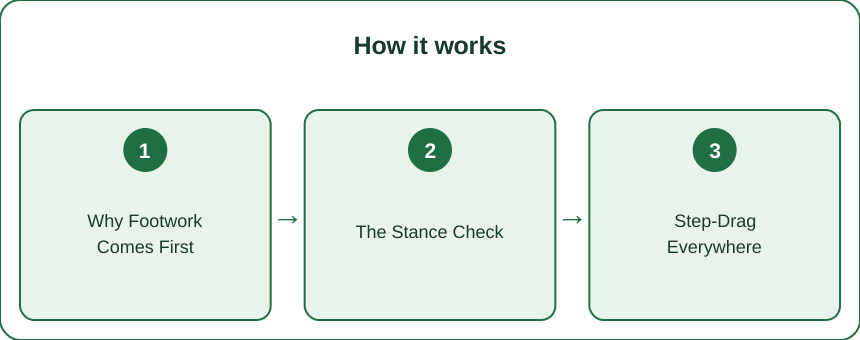
Drill 3: Shadow rounds with feet focus
Two-minute shadowboxing rounds where punches don’t matter at all — only constant, balanced movement.
In and out. Small pivots. Circle left, circle right. Never flat-footed, never crossed, never still for more than a beat. Throw a lazy jab occasionally just to keep your hands honest, but the entire assessment is your feet.
The drill: 3 rounds of 2 minutes, 60 seconds rest.
Do this and your calves will inform you tomorrow that they were involved. Stairs feel different for a couple of days — which is the clearest possible evidence that this is real training and not a warm-up.
The full 15-minute footwork session: stance check (2 min) → step-drag drill (4 min) → box corners (4 min) → shadow rounds with feet focus (5 min). Three times a week.
5 Mistakes Everyone Makes With Boxing Footwork
- Crossing the feet. The cardinal sin. Film 30 seconds of movement and you’ll catch yourself doing it when you turn.
- Steps that are far too big. Small steps keep your stance intact; big steps mean you spend half your time rebuilding it.
- Bouncing high. Being “on your toes” means light and springy, not hopping. High bouncing wastes energy and leaves you airborne when you need to be planted.
- Going flat-footed the moment you get tired. This is where a round is lost. When you feel your heels drop, that’s the cue to reset, not to push harder.
- Practising feet only during shadowboxing. The third mistake catches most beginners, but this last one is why footwork stays mediocre for years — footwork deserves its own dedicated drill time, not just whatever attention is left over while you’re thinking about punches.
Mini FAQ
How often should I practise boxing footwork?
Three sessions a week of 15 minutes is plenty and produces visible change within a month. Footwork is a low-fatigue, high-frequency skill — unlike bag work, you can do it daily without wrecking your shoulders, and short frequent sessions beat one long one.
Can I train footwork at home without equipment?
Entirely. Everything here needs about 6 by 6 feet of floor and a roll of tape. No gloves, no bag, no partner. In fact home is the ideal place for it, because footwork drills look repetitive and boring and you won’t be tempted to skip to punching.
Should I wear boxing shoes for footwork drills?
Not necessary to start. Any flat, thin-soled shoe works — running shoes are actually the worst choice, since thick cushioned soles hurt your feel for the floor and roll under lateral movement. Barefoot or in socks on carpet is fine for pivots; boxing shoes are a nice upgrade once you’re committed.
TL;DR:
- Power and defense both start at the floor — footwork before punches.
- Stance: staggered, wider than shoulders, on the balls of the feet, springy.
- Step-drag is 80% of boxing movement: near foot steps, far foot drags, never cross.
- Keep steps small (6–12 inches) and reset your stance every time.
- Drill the box corners for angles, then 2-min shadow rounds with feet only.
- 15 minutes, 3× a week — and expect your calves to notice.
Champions are built from the ankles down. Drill the boring part.
Keep Reading
This article is for general informational and styling purposes only. Fit, sizing, and product availability may vary.