Why Your Punches Lose Power After Round Two (and How to Fix It)
Quick Answer: Punch power fades after round two mainly from hip rotation breaking down as shoulders and arms fatigue faster than the legs and core. Prioritizing leg and core conditioning over arm-focused training, plus pacing punch output earlier, preserves power longer into a session.
Your first-round jab feels sharp and your hook lands clean — by round three it feels like you’re pushing instead of snapping. That’s not just tiredness, it’s a specific breakdown.

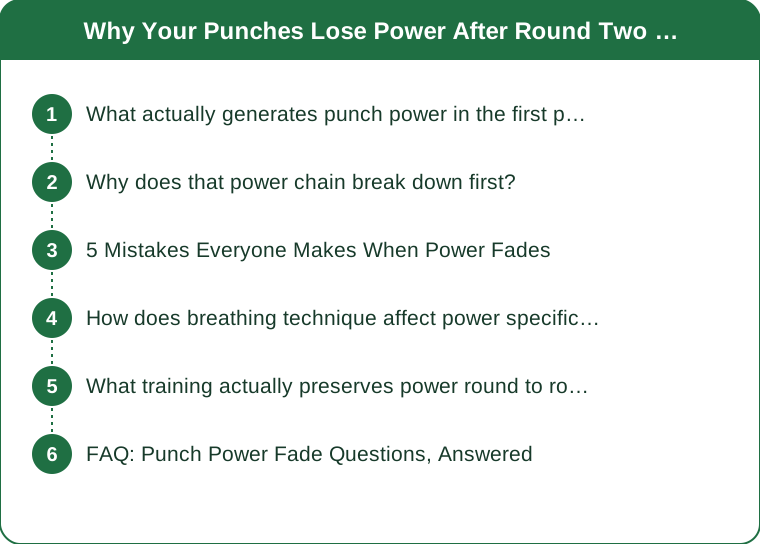
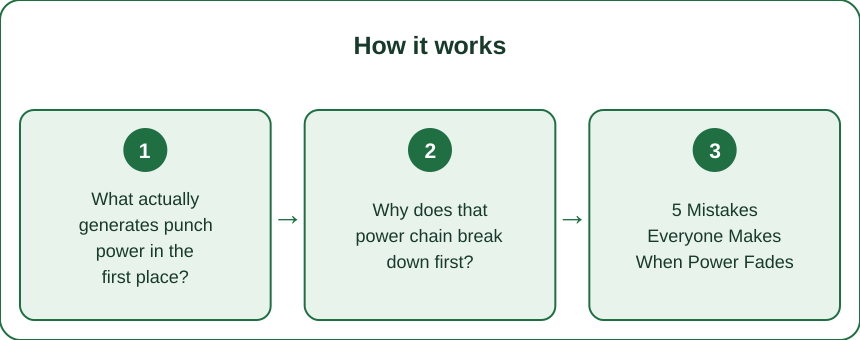
What actually generates punch power in the first place?
Real power comes from hip and torso rotation transferring force through the core into the shoulder and arm, not from arm strength alone — the arm is really just the last link transmitting force that starts from the ground up.
Why does that power chain break down first?
As the legs and core fatigue, rotation becomes shallower and slower, so punches increasingly rely on arm strength alone, which produces a visibly weaker, more “pushy” punch even though the arm itself may not feel exhausted yet.
5 Mistakes Everyone Makes When Power Fades
- Trying to compensate by swinging harder with the arm alone, which wastes energy without adding real power. 2) Dropping hands from fatigue, which affects defense as much as offense. 3) Losing footwork precision, cutting off proper weight transfer. 4) Breathing shallowly under fatigue, reducing core stability during rotation. 5) Skipping leg conditioning work in training because it “isn’t boxing-specific,” when it’s actually foundational to punch power.

How does breathing technique affect power specifically?
A sharp exhale timed with the punch stabilizes the core during rotation, similar to a lifter’s breath during a heavy set — shallow, held breathing under fatigue lets the core lose the rigidity that transfers force efficiently.
What training actually preserves power round to round?
Leg and core conditioning — squats, rotational core work, and interval sprints — build the endurance in the parts of the chain that fatigue first, doing more for round-three power than additional arm or shoulder work.
FAQ: Punch Power Fade Questions, Answered
Is losing some power after round one just normal?
Some decline is normal and expected even for elite boxers, but a dramatic drop-off by round two usually points to an undertrained power chain rather than an unavoidable limit.
Does hand wrap or glove weight affect power fade?
Minimally for power itself, though heavier gloves add fatigue faster, which can indirectly affect how long you maintain full-power output during a session.
How long does it take to notice improvement from leg/core focused training?
Most people notice better round-three power retention within 3-4 weeks of adding dedicated leg and rotational core conditioning twice a week.
TL;DR:
- Punch power depends on hip and core rotation, not just arm strength
- That rotation chain breaks down first as legs and core fatigue
- Sharp exhales during punches help maintain core rigidity under fatigue
- Leg and rotational core conditioning preserves power better than more arm work
The fix for fading power usually isn’t punching harder — it’s training the parts of the chain that give out first.
Keep Reading
This article is for general informational and styling purposes only. Fit, sizing, and product availability may vary.