Why Your Punches Feel Noticeably Weaker Training Alone at Home Versus at the Gym
Quick Answer: Punch power often feels lower training alone because gym environments provide external pacing cues (a coach calling combinations, other people’s intensity, round timers with bells) that push your nervous system to output more than self-paced solo training typically does — the fix is structuring solo sessions with strict timers and pre-planned combinations instead of freestyle pacing.
You throw the exact same combinations on your home bag that felt sharp and powerful at the gym, and they feel flat. It’s not that your technique got worse alone — it’s that the external push that was training your output disappeared.

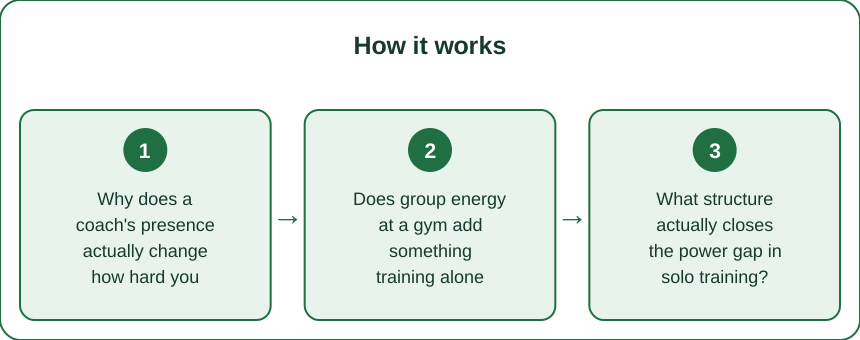
Why does a coach’s presence actually change how hard you punch?
External pacing and verbal cues create a time-pressure response that pushes output closer to your real maximum, similar to how people often lift slightly heavier with a spotter present than completely alone. A coach calling out the next combination in real time removes the split-second decision-making that, done alone, quietly steals intensity from your punches.
This isn’t about motivation in a vague sense — it’s a measurable effect of removing decision load so your nervous system can commit fully to output instead of splitting attention between deciding and executing.
Does group energy at a gym add something training alone genuinely can’t replicate?
To some extent, yes — being surrounded by other people’s visible effort tends to unconsciously raise your own intensity ceiling, a documented pattern often called social facilitation. This effect is real but not the whole story, since much of the power gap comes from pacing structure rather than the social element alone.
The practical takeaway isn’t that solo training is pointless — it’s that solo training needs to deliberately replace what a gym environment normally provides for free.

What structure actually closes the power gap in solo training?
Pre-plan your combinations before you start and use a strict round timer with a bell sound, rather than freestyling and pacing yourself. Removing the in-the-moment decision of ‘what should I throw next’ frees up the same mental bandwidth that a coach calling combinations frees up in a gym setting.
Some solo trainers also find that recording sessions and reviewing them adds a version of the accountability a coach’s watching eyes normally provides.
What Nobody Tells You About Solo Combat Training
Nobody tells you that decision fatigue is a real, measurable drag on physical output — every micro-decision about what to throw next, made mid-combination, pulls a small amount of focus away from committing fully to the punch itself. This is why pre-planned combinations consistently outperform freestyle solo sessions for raw power output, even at identical effort levels.
They also don’t tell you that music with a strong, driving tempo can partially substitute for external pacing cues when training completely alone.
FAQ: Solo Boxing Training and Power, Answered
Is it worth filming solo sessions to check power and form?
Yes — reviewing footage catches technique breakdowns you can’t feel in the moment and adds a layer of accountability similar to a coach’s feedback.
Does a heavier bag help compensate for lower solo intensity?
Not directly — bag weight affects how the bag moves and feels, not how hard you’re actually punching, so it doesn’t substitute for pacing structure.
How long does it take to build the discipline for structured solo sessions?
Most people notice pre-planned, timed rounds feeling more like real training within 2-3 weeks of consistently using the structure instead of freestyling.
TL;DR:
- Gym pacing cues and coach-called combinations reduce decision load, freeing up power output
- Group environments genuinely raise intensity ceiling through social facilitation, but that’s not the whole gap
- Pre-planning combinations and using a strict timer closes most of the solo power gap
- Filming sessions adds a layer of accountability similar to a coach watching
Weaker-feeling punches at home aren’t a sign of losing progress — they’re a structure problem, and structure is the easiest part of training to fix.
Keep Reading
This article is for general informational and styling purposes only. Fit, sizing, and product availability may vary.