Why Your Hands Swell Inside the Wraps on Humid Days
Quick Answer: Exercise increases blood flow to working muscle and heat causes peripheral vasodilation, so your hands genuinely get bigger during a session, and more so in humid heat when your body is dumping heat through the skin. Wraps applied at rest are sized for hands that no longer exist by round three. The fix: wrap slightly looser at the wrist-to-knuckle transition, leave the fingers spread while wrapping, and re-check between rounds rather than wrapping tighter to compensate.
Round one, perfect. Round four, your fingertips are tingling and you are counting down to unwrapping more than to the bell.
It is not a technique problem and it is not weak hands. It is a sizing problem with a moving target.

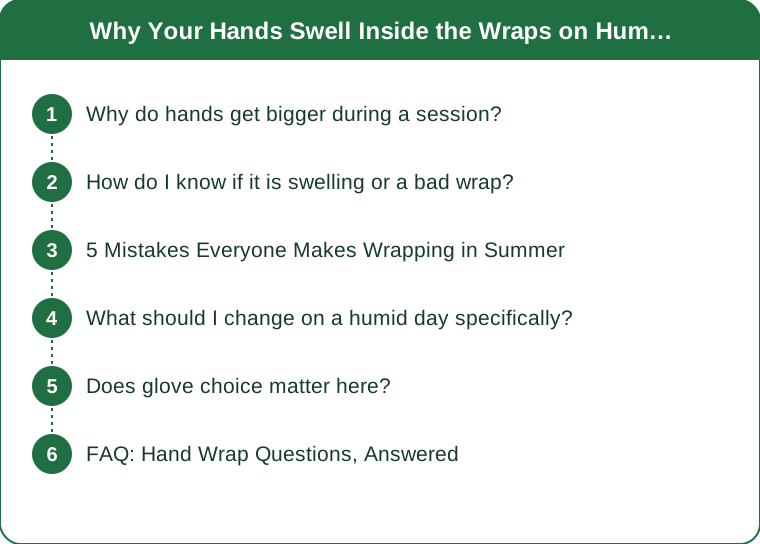
Why do hands get bigger during a session?
Two separate mechanisms stack up.
Working muscle demands blood. Grip, forearm and hand muscles are under near-constant tension on the bag, and blood flow to active muscle can rise many times over resting levels. That volume has to go somewhere.
Heat causes vasodilation. To shed heat, your body opens up blood vessels near the skin, and the hands are one of the primary radiators. On a humid day, evaporative cooling is less effective, so your body leans harder on blood-flow cooling to compensate.
Add gravity. Arms spend a lot of a boxing session below heart level between combinations, and fluid pools accordingly.
The practical result is a hand that can be noticeably larger by round three than it was when you wrapped it.
How do I know if it is swelling or a bad wrap?
The timing tells you.
Swelling-related tightness builds gradually, feels uniform across the hand, and eases within a couple of minutes of unwrapping. Fingers may feel full or slightly numb at the tips.
Wrap-related restriction is there from the start or appears suddenly with movement, is usually localised to one band, and often creates a distinct line of numbness following one nerve path rather than the whole hand.
The one that needs attention: numbness in the little finger and half the ring finger suggests pressure on the ulnar nerve at the wrist, and that is a wrap placement issue you should fix rather than train through.
If colour changes, if numbness persists after unwrapping, or if it recurs every session in the same spot, stop wrapping over it and get it looked at.
5 Mistakes Everyone Makes Wrapping in Summer
-
Wrapping with the fingers held together. Spread them. Fingers together closes the knuckle span, and every layer you apply then fights that span when you make a fist.
-
Anchoring too many turns at the wrist first. Three to four wrist turns is plenty to start. Piling on eight before you have reached the knuckles means the tightest structure sits exactly where the nerves and blood vessels enter.
-
Pulling each pass at the same tension. Wrist turns can be firm. Knuckle and thumb passes should be noticeably lighter. Uniform tension is what produces round-four misery.
-
Wrapping cold, then warming up hard. Wrap after a light warm-up, once your hands have already started to fill, and you are sizing for the real thing.
-
Re-wrapping tighter when it feels loose mid-session. It feels loose because your hand shrank slightly during the rest break. It will refill. Tightening now guarantees a problem two rounds later.

What should I change on a humid day specifically?
Small adjustments, applied before you start rather than after it hurts:
-
Wrap five to ten minutes after a warm-up, not on arrival. You are sizing for a warm hand.
-
Use a slightly longer wrap with lighter tension rather than a shorter wrap pulled tight. More layers at lower tension distributes pressure better than fewer at high tension.
-
Choose semi-elastic Mexican-style wraps in heat. They accommodate volume change. Rigid cotton wraps do not, which is exactly the wrong property in August.
-
Unwrap between the bag work and conditioning. Two minutes of unwrapped rest resets everything, and you can rewrap in under a minute.
-
Keep your hands above heart level during rests. Hanging arms pool fluid. Resting hands on your head or on the top of the bag drains it.
-
Rinse and dry wraps after every humid session. Damp wraps hold moisture against skin, soften, and lose the little structure they had.
Does glove choice matter here?
Considerably, and it is the variable people ignore.
A glove that fits perfectly in January is a different glove in August with a swollen hand and a sweat-soaked liner. Foam compresses and rehydrates poorly, and a glove that has absorbed sweat sits tighter and dries slower.
If you train year-round in a hot gym, sizing up a half step for summer bag work is reasonable, especially for longer conditioning rounds where swelling has time to accumulate.
Also: dry your gloves properly. A glove that never fully dries between sessions stays compressed, holds bacteria, and feels tighter every week. Pull the liners out, use a fan rather than direct heat, and never leave them zipped inside a bag overnight in summer.
FAQ: Hand Wrap Questions, Answered
Is some tingling normal?
Mild fullness or a slight buzz that disappears within a minute or two of unwrapping is common. Numbness that persists, or that follows a single finger pattern, is not, and should be addressed rather than tolerated.
Should wraps be tight for protection?
Protection comes from structure and placement, not compression. The wrist support and knuckle padding do the work. Squeezing harder adds nothing except restriction.
How often should I replace wraps?
When they stop returning to shape after washing, typically six to twelve months of regular use. A stretched-out wrap needs excessive tension to feel supportive, which is how people end up over-tightening.
This is general information, not medical advice.
TL;DR:
- Your hands genuinely enlarge during a session, more so in humid heat when the body dumps heat through the skin.
- Wrap after a warm-up, with fingers spread, and lighter tension over the knuckles than the wrist.
- Ulnar-pattern numbness in the little and ring fingers is a placement problem, not swelling.
- Semi-elastic wraps, hands above heart level during rests, and dry gear all help.
The instinct when a wrap feels wrong is to wrap tighter. In August that is precisely backwards. Size for the hand you will have in round four and rounds one through three take care of themselves.
Keep Reading
This article is for general informational and styling purposes only. Fit, sizing, and product availability may vary.