Why Your Hands Hurt After Bag Work - and How Wrapping Actually Fixes It
Quick Answer: Hands hurt after bag work because 27 small bones are absorbing impacts they were never designed for, usually with two fixable errors: loose or lazy wrapping that lets bones shift on impact, and punches landing with a bent wrist or on the wrong knuckles. Wraps do not primarily pad your hand - they compress it into a single solid unit and splint the wrist straight, so force travels through the forearm instead of collapsing joints on the way. Learn one good wrap pattern, land on the first two knuckles with a straight wrist, and most beginner hand pain disappears within two weeks.
The workout felt great. Then you woke up, tried to open a jar, and your hand filed a formal complaint. Time to talk about the twenty minutes nobody teaches properly.

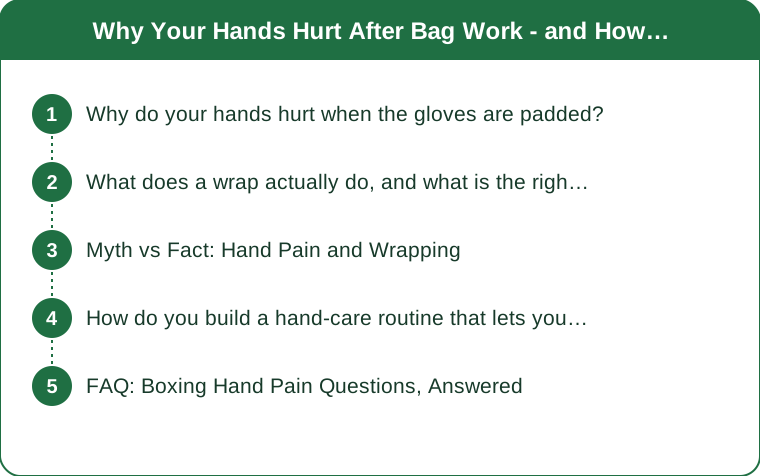
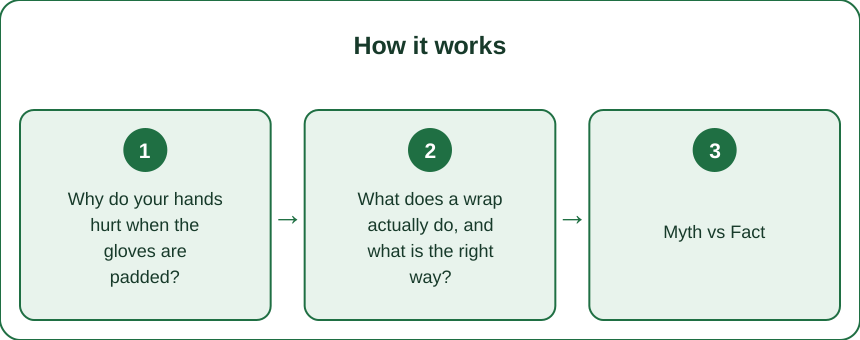
Why do your hands hurt when the gloves are padded?
Because padding addresses the skin, and your pain lives in the structure underneath.
A hand is 27 bones held together by soft tissue. It evolved to grip and manipulate, not to deliver repeated blunt impact. Every bag session asks a precision instrument to work as a hammer.
Impact force does not disappear into the glove. Padding spreads force across the surface and slows the impact slightly, but the load still travels through your knuckles, into the small bones of the hand and wrist, and up the forearm. Where it travels is decided by alignment, not by foam.
A bent wrist is the number one culprit. If the wrist is flexed or cocked sideways at impact, force takes a corner - and the corner is where it does damage. That deep ache on the thumb side or back of the wrist after bag work is almost always an alignment tax.
Landing on the wrong knuckles is number two. Power should arrive through the first two knuckles - index and middle - which line up with the forearm bones. Landing ring-finger side loads the weakest part of the hand; that outside-edge ache is your hand telling you exactly where the punches are landing.
Unwrapped bones shift on impact. Without compression, the hand bones can splay and slide slightly with each hit, straining the ligaments between them. This is the diffuse, all-over soreness - not one spot, just a tired, bruised-feeling hand.
And volume arrives faster than adaptation. A beginner throws hundreds of punches per class with hands that have never conditioned. Bones and connective tissue do adapt to loading, but on a timeline of months. The wrap covers the gap.
What does a wrap actually do, and what is the right way?
A wrap is not a bandage. It is scaffolding, and it has three jobs.
Job one: compress the hand into one unit. Wrapped correctly, the four knuckles and the small bones behind them move together instead of independently, so impact is shared instead of concentrated.
Job two: splint the wrist. Firm turns around the wrist reduce how far it can flex or bend sideways at impact, keeping the straight-line path from knuckle to forearm honest even when you are tired.
Job three: anchor the thumb. The thumb loop and its wrap protect the joint most often injured by a mis-landed hook.
A pattern that works: loop the thumb and take three firm turns around the wrist. Three turns around the knuckles - wrapping over a slightly spread hand so making a fist stays comfortable. Then the X pattern: between each pair of fingers, crossing the back of the hand, which locks the knuckle padding in place. One turn around the thumb, one anchoring turn trapping it, then spend everything left on wrist turns and secure the closure at the wrist.
Test every wrap the same way. Make a fist: snug across the knuckles, no fingertip tingling. Flex the wrist: it should resist noticeably. If knuckle pressure hurts before you touch the bag, rewrap looser; if the wrist folds freely, rewrap tighter at the bottom.
Traditional wraps beat quick-wrap gloves while you learn. The slip-on gel wraps are fine for a rushed lunch session, but they compress less and splint barely at all. The 180-inch semi-elastic wrap is twenty minutes of learning that pays out for years.

Myth vs Fact: Hand Pain and Wrapping
Myth: Sore knuckles mean you are training hard. Fact: Mild skin-level tenderness early on is common; joint ache, wrist pain, or swelling is feedback about alignment and wrapping, not a merit badge. Pain that escalates week over week is a form problem compounding.
Myth: Wraps are mostly extra padding. Fact: Their main function is compression and splinting - turning 27 loose bones into one unit and keeping the wrist straight. Padding is the glove’s job.
Myth: Tighter is always better. Fact: A wrap that tingles your fingers or aches across the knuckles before you punch is cutting circulation and will make the session worse. Snug at the wrist, firm at the knuckles, never numb.
Myth: Big gloves make wrapping unnecessary. Fact: Glove size changes surface padding, not internal bone alignment. Hands break inside 16oz gloves every year - almost always unwrapped or badly wrapped ones.
Myth: Punching harder toughens hands faster. Fact: Bones and connective tissue adapt to progressive load over months. Spiking intensity before that adaptation is how beginners earn bone bruises and forced time off. Volume and technique first, power later.
Myth: Wrist pain means you need wrist curls. Fact: Strength helps eventually, but ninety percent of beginner wrist pain is a bent wrist at impact. Fix the alignment this week; add conditioning over the months. The order matters.
How do you build a hand-care routine that lets you train more?
The goal is boring: hands that never become the limiting factor.
Wrap for every session, including the light ones. The day you skip wraps for three easy rounds is disproportionately often the day something tweaks - easy days breed casual wrists.
Start every session with straight-wrist checking. Ten slow punches per hand against the bag at half power, watching the wrist stay flat. It calibrates alignment before speed hides it. Treat it like the boxing equivalent of warm-up sets.
Grade your volume. New to bag work, cap sessions at three or four rounds and add a round per week. Your conditioning improves faster than your connective tissue - let the slower tissue set the pace.
Respect swelling. Ice and a rest day for a puffy hand; a doctor for anything with a specific point of sharp pain, especially along the outside edge after a bad landing. Boxers ignore exactly the wrong things.
Wash the wraps, retire the dead ones. Wraps that have lost their slight stretch stop compressing properly. A mesh laundry bag keeps them from strangling the rest of the wash - and yes, they go in with the leggings and workout tops after every couple of sessions, because damp wraps breed things you do not want on broken skin.
Build the supporting cast. Grip work, rice-bucket sessions, and simple wrist stability drills - a few minutes twice a week - gradually turn beginner hands into hands that shrug off double sessions. Comfortable training gear helps here too; if your high-waisted leggings and top let you move through full rounds without adjusting anything, your attention stays on the two knuckles that matter.
General information, not medical advice - get sharp, localised, or persistent pain assessed.
FAQ: Boxing Hand Pain Questions, Answered
Why do my knuckles hurt after punching the bag?
Usually a mix of unconditioned tissue meeting sudden volume, loose wrapping letting bones shift, and landings spread across the wrong knuckles. Wrap firmly, land on the first two knuckles with a straight wrist, and build rounds gradually - most beginner knuckle pain fades in one to two weeks.
How tight should hand wraps be?
Snug enough that the hand feels solid and the wrist resists bending, never so tight that fingers tingle or the fist aches before impact. The fist test after wrapping tells you immediately which side you are on.
Are quick wraps as good as traditional wraps?
They are better than nothing and fine for occasional light sessions, but they compress less and barely splint the wrist. For regular bag work, traditional 180-inch semi-elastic wraps protect meaningfully better.
Should my wrist hurt after boxing?
No - wrist pain is the classic sign of a bent wrist at impact or insufficient wrist wrapping. Recheck alignment at half power and add wrist turns to your wrap. Pain that persists or sharpens deserves professional assessment.
How long until my hands get used to bag work?
Skin and general soreness settle within a couple of weeks; bones and connective tissue keep adapting for months. Add volume by about a round a week and let your hands, not your cardio, set the progression.
TL;DR:
- Hand pain is alignment and compression, not insufficient padding - 27 bones need to hit as one unit.
- Wraps exist to compress the hand and splint the wrist; learn one real pattern with the X between the fingers.
- Land on the first two knuckles with a dead-straight wrist, checked slow at the start of every session.
- Add bag rounds gradually - connective tissue adapts slower than cardio.
- Snug never numb, wash the wraps, and treat swelling with rest instead of pride.
Wrapping is the twenty-minute skill that decides whether bag work builds you up or wears you down. Learn it once, do it every time, and your hands stop being the conversation.
See It in Motion
Seen here: Super High Waist Embossed Yoga Leggings with Inner Pocket — shop it on bubblelime.com
Keep Reading
This article is for general informational and styling purposes only. Fit, sizing, and product availability may vary.