Why Your Guard Drops Before Your Punches Slow Down
Quick Answer: Holding a guard is a sustained isometric contraction of the shoulders and upper back, while punching is a series of short explosive efforts. Isometric holds fatigue faster and recover slower, so the guard fails before the hands do. Train the hold specifically - static guard holds, high-rep shoulder endurance work - rather than assuming more rounds will fix it.
Your coach says hands up, you put them up, and ninety seconds later they are down again without you deciding anything.
That is not concentration. It is a different energy system running out.

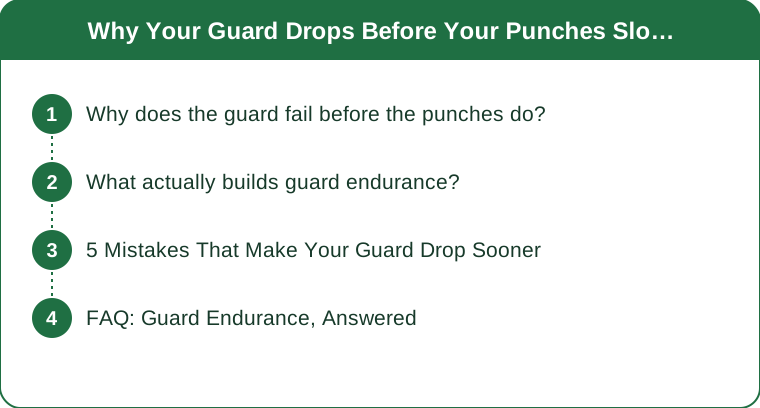
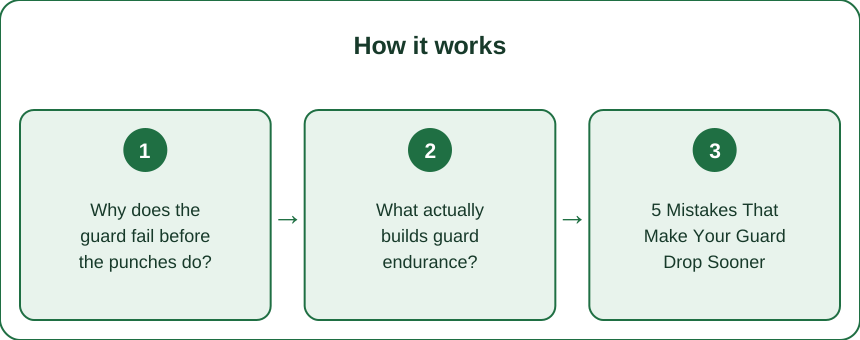
Why does the guard fail before the punches do?
They are different kinds of muscular work. A punch is a brief explosive effort of a second or less, followed by recovery. A guard is a continuous isometric hold that never gets a break for the whole round.
Sustained isometric contraction restricts blood flow to the working muscle, which means the shoulders are working with a reduced oxygen and fuel supply the entire time they are up. Explosive efforts do not have that problem.
The muscles are different too. The front and middle deltoids, upper traps, and the stabilisers around the shoulder blade do the holding, while the chest, lats, and legs generate most of the punch.
So the timeline splits. Your punching power can still be there in round four while the specific muscles keeping your hands at cheek height have been failing since round two.
Tension makes it worse. New boxers hold the guard with far more effort than needed, gripping and shrugging, which accelerates the failure considerably.
And the drop is not usually a decision. The elbows drift out, the hands come to chin height, then jaw height, and you only notice when someone points it out or a shot gets through.
What actually builds guard endurance?
Train the hold, not just the rounds. Static guard holds are the most specific option available - hands up in a proper guard, no punching, 60 to 90 seconds, for 3 to 5 sets with a minute of rest.
It is dull and it works faster than any amount of extra bag work, because it targets the exact quality that is failing.
Add light-weight high-rep shoulder work twice a week. Lateral raises and front raises with 1 to 3kg for sets of 20 to 30 build the local endurance the guard depends on, and heavy pressing does not transfer nearly as well.
Strengthen the upper back, since the guard is held from the shoulder blades as much as from the arms. Face pulls, band pull-aparts, and rows in the 12 to 20 rep range all contribute directly.
Shadowbox with a guard focus, watching only your hands in the mirror for one round. This builds the awareness that lets you catch the drift before it becomes a drop.
Practise relaxing while holding. The most efficient fighters hold a guard with surprisingly little tension, and learning to unclench the hands and drop the shoulders extends the hold significantly.
Progress the duration, not the load. Guard endurance is about time under tension, and adding weight changes what you are training.

5 Mistakes That Make Your Guard Drop Sooner
1. Shrugging your shoulders up toward your ears. This recruits the upper traps into a position they cannot sustain, and it is the most common cause of a guard that fails in round two. Shoulders down, hands up.
2. Holding your fists clenched the whole round. Constant grip tension fatigues the forearms and feeds tension up into the shoulders. Relax the hands between punches and tighten only on impact.
3. Elbows flared out. A wide guard has a much longer lever arm and costs substantially more to hold than one with the elbows tucked in against the ribs.
4. Breathing shallowly or holding your breath. Restricted breathing accelerates fatigue everywhere, and the guard is the first thing to show it. Exhale sharply on every punch and breathe steadily between.
5. Only ever training the guard while punching. If the hold is what fails, the hold is what needs isolated training. Rounds alone let you practise dropping your hands with excellent technique.
The second mistake surprises most people, because clenched fists feel like readiness - and they are the reason a lot of boxers find their forearms burning before anything else does.
FAQ: Guard Endurance, Answered
Why do my hands drop even when I am concentrating?
Because it is muscular, not mental. Sustained isometric holds restrict blood flow to the shoulders and fatigue on a different timeline from explosive punching, so concentration cannot override it indefinitely.
How long should I be able to hold a guard?
Aim to build to 90 seconds of static hold without drift, then work up to three-minute holds. That covers a round with margin.
Will more bag rounds fix it?
Slowly and inefficiently. Isolated static holds target the failing quality directly and produce noticeable change in two to three weeks, which extra rounds rarely do.
Should I lift heavy for shoulder endurance?
No. Light weights for 20 to 30 reps transfer far better than heavy pressing, because you are training local muscular endurance rather than maximum strength.
Why do my forearms burn before my shoulders?
Usually constant fist clenching. Relax the hands between punches and tighten only at the moment of impact - it extends everything else too.
Does guard position matter for how long I can hold it?
A great deal. Elbows tucked to the ribs is far cheaper to hold than a flared guard, because the lever arm is much shorter.
How quickly will this improve?
Most people see a clear difference within two to three weeks of adding static holds two or three times a week. It is one of the faster-responding qualities in boxing training.
TL;DR:
- Holding a guard is a sustained isometric contraction; punching is a series of short explosive efforts, and they fatigue on different clocks.
- Isometric holds restrict blood flow to the shoulder, so the guard fails while your punches still feel fast.
- Train static guard holds - 60 to 90 seconds, 3 to 5 sets - plus light high-rep shoulder and upper back work.
- Shrugged shoulders, clenched fists, and flared elbows all shorten how long you can hold.
- Progress duration rather than load, and expect a noticeable change in two to three weeks.
Rounds alone let you practise dropping your hands with excellent technique. Train the hold itself.
Keep Reading
This article is for general informational and styling purposes only. Fit, sizing, and product availability may vary.