Hanging the Bag: A Home Heavy Bag Setup That Won't Take Down the Ceiling
Quick Answer: For most people — especially renters — a freestanding bag with a sand-filled base on a rubber mat is the right answer: no mounting, no structural risk, repositionable. Hanging bags require a ceiling joist or a wall mount into studs, never drywall anchors. Wrap your hands every single session, no exceptions.
The home heavy bag is the dream purchase that arrives with structural engineering questions attached.
Can the ceiling take it? Can the neighbors? Can the drywall?
(No. The drywall cannot.)
Here’s the setup guide that keeps the workout, the deposit, and the downstairs relationship all intact.

Should You Get a Freestanding Bag or a Hanging One?
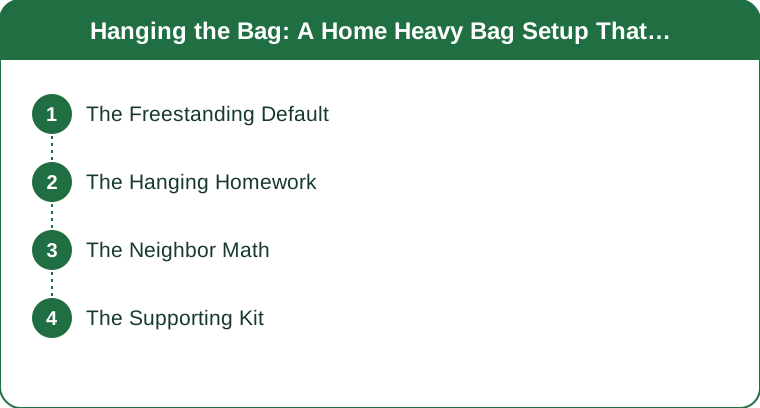
For renters and normal ceilings: freestanding, and it isn’t close.
No mounting, no drilling, no landlord conversation. The base fills with water or sand — use sand. It’s heavier for the same volume, which means quieter and steadier, and it can’t leak all over the floor.
The trade-off is that freestanding bags slide under heavy hooks and hard body shots. A rubber mat underneath fixes most of it; a second mat or a couple of sandbags around the base fixes the rest.
This is the right answer for roughly 80% of home boxers. The other 20% own their ceiling and want a bag that swings properly.
What Does a Hanging Bag Actually Require?
A ceiling joist, or a proper wall mount bolted into studs. Nothing else.
A swinging 70-pound bag doesn’t apply 70 pounds of force — the dynamic load from a hard hook can multiply that several times over. Drywall anchors are how ceilings become skylights, and this is not a hypothetical failure mode.
What you need:
- A stud finder — and confirm with a small pilot hole, since stud finders lie near pipes and wiring
- Lag bolts into the joist, not screws into the ceiling board
- A heavy bag hanger or spring mount rated well above your bag weight
- A swivel so the bag rotates instead of twisting the chain
If any of that sounds like a project you’d rather not manage, a standalone bag stand skips the structural exam entirely. It’s the middle option — a real hanging bag, no holes in anything.

How Do You Keep the Neighbors Happy?
Bag work transmits thump downstairs — impact travels through structure far better than it travels through air, which is why the person below hears more than the person next door.
The mitigation stack, in order of effectiveness:
- Rubber mats under everything. Horse-stall mats are the standard cheap answer and they’re excellent.
- Sand-filled base over water-filled. Denser, deadens more, moves less.
- Daytime rounds. The single most effective item on this list, socially speaking.
- A softer bag. Aqua bags and uppercut bags thud rather than crack.
- Distance from shared walls. A few feet helps more than expected.
A considerate schedule keeps the hobby’s welcome intact, and it’s cheaper than any of the equipment.
What Else Do You Need?
Hand wraps — always. Bare-knuckle bag work is a wrist tax with compound interest, and the wrist is what fails, not the knuckles. 180-inch wraps, learned once from a video, takes 90 seconds a hand.
Bag gloves. Not the same as sparring gloves. 12–16oz works for most people.
A round timer app. Free, and it structures the whole session — 3 minutes on, 1 minute off is the standard round.
Floor space for footwork. The bag is the anchor, not the whole workout. You need room to circle it.
A complete home session: three rounds on the bag plus two rounds of shadowboxing. Fifteen minutes of work, and it’s plenty.
5 Mistakes Everyone Makes
- Anchoring into drywall. The mistake that ends with a hole in the ceiling and a bag on the floor.
- Skipping wraps “just this once.” Wrist injuries from bag work are common and slow to heal.
- Filling the base with water. Lighter, slides more, and eventually leaks.
- Punching a bag that’s too hard. An overfilled bag is unkind to wrists and elbows. It should give slightly.
- Standing still and swinging. Circle the bag, move your feet, throw combinations. Static punching builds bad habits fast.
FAQ
How heavy should a heavy bag be?
Roughly half your bodyweight is the usual guideline — so 70–80 lb for most adults. Too light and it swings wildly; too heavy and it’s punishing on the hands and joints.
Can I hang a bag in an apartment?
Almost never into the ceiling — that’s typically both a lease violation and a structural risk in shared buildings. A freestanding bag or a bag stand is the apartment answer.
Do I need to know how to punch before buying one?
Not to start, but learn the basics first — a few beginner videos on stance, the jab, and the cross. Bad mechanics on a heavy bag put load through the wrist and shoulder in the wrong direction.
How do I stop my freestanding bag from sliding?
Sand instead of water in the base, a rubber mat underneath, and if it still moves, sandbags or a weight plate on the base. Also check your distance — most sliding happens when you’re standing too close and pushing rather than snapping punches.
TL;DR:
- Freestanding with a sand-filled base on a rubber mat is right for most home setups
- Hanging bags need a ceiling joist or studs — never drywall anchors
- A swinging 70 lb bag generates several times its static weight in force
- A bag stand is the middle option: real hanging bag, no drilling
- Neighbor stack: rubber mats, sand base, daytime rounds, softer bag
- Wrap your hands every session; the wrist is what gets hurt
- Bag weight ≈ half your bodyweight
- Three bag rounds plus two shadowbox rounds is a complete session
Freestanding for most, joists for the committed, sand and mats for the neighbors, wraps forever. The bag delivers the workout it promised — once the engineering questions stop swinging.
Keep Reading
This article is for general informational and styling purposes only. Fit, sizing, and product availability may vary.