The Hand Wrap Technique That Actually Protects Your Wrists on the Heavy Bag
Quick Answer: A hand wrap protects your wrist by locking it in a neutral, slightly extended position through X-pattern wraps across the wrist joint — most beginner wrist pain comes from wraps that are too loose around the wrist specifically, even if the knuckles are wrapped tightly.
Most beginners wrap their knuckles carefully and their wrist almost as an afterthought. It’s backwards — the wrist is where the real support needs to happen.

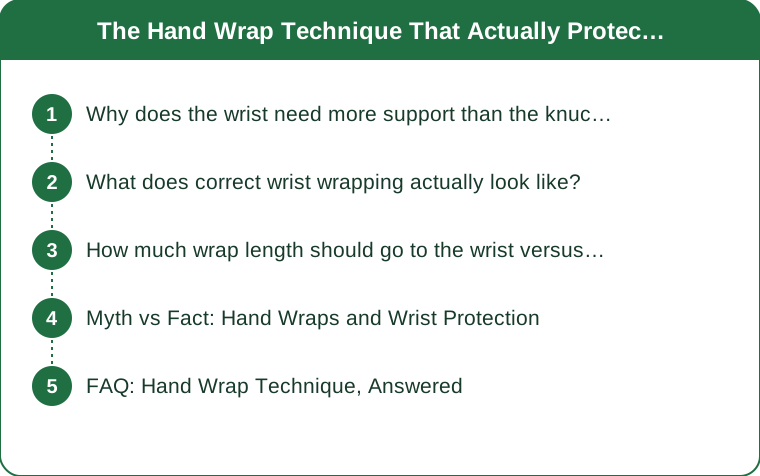
Why does the wrist need more support than the knuckles?
On impact, your wrist absorbs bending and twisting forces that the knuckles simply don’t experience the same way. An unsupported wrist can flex backward on contact, which is the mechanism behind most heavy-bag wrist strains and sprains — the knuckles being padded doesn’t prevent this.
What does correct wrist wrapping actually look like?
Figure-eight or X-pattern wraps directly across the wrist joint, snug enough to limit backward flex but not so tight that it cuts circulation. You should be able to make a full fist and feel firm, even support — if the wrist can still bend freely, it’s too loose.

How much wrap length should go to the wrist versus the knuckles?
For a standard 180-inch wrap, roughly the first third around the wrist and lower palm, then knuckle coverage, then a return pass reinforcing the wrist again at the end. Wrist coverage should happen at both the start and end of the wrap, not just once.
Myth vs Fact: Hand Wraps and Wrist Protection
Myth: Thicker gloves make hand wraps less necessary. Fact: Gloves cushion impact but do almost nothing to stabilize the wrist joint itself — wraps and gloves protect different things.
Myth: A tighter wrap is always a safer wrap. Fact: Overly tight wraps restrict circulation and can cause numbness without adding proportional support — snug and supportive beats maximally tight.
Myth: Wrist pain after bag work just means you need to build up tolerance. Fact: Consistent wrist pain is far more often a wrapping or technique issue than a conditioning issue — check the wrap before assuming it’s just something to push through.
FAQ: Hand Wrap Technique, Answered
How do I know if my wrap is too tight?
If fingers feel tingly, numb, or discolored within a few minutes, loosen it — support shouldn’t come at the cost of circulation.
Do gel wraps work as well as traditional cloth wraps?
Gel wraps offer quicker convenience but generally provide less wrist stabilization than a properly done cloth wrap — cloth wraps remain the better choice for serious heavy bag work.
Should beginners wrap differently than experienced boxers?
The core wrist-protection technique stays the same at every level — what changes with experience is wrap speed and minor personal adjustments, not the fundamental wrist support pattern.
TL;DR:
- The wrist absorbs bending and twisting forces the knuckles don’t — it needs the real support
- X-pattern or figure-eight wraps across the wrist joint, snug but not circulation-cutting
- Wrap the wrist at both the start and end of the wrap, not just once
- Persistent wrist pain after bag work usually means a wrap or technique issue, not low tolerance
Spend the extra 20 seconds on the wrist portion — it’s the part actually preventing the injury.
Keep Reading
This article is for general informational and styling purposes only. Fit, sizing, and product availability may vary.