The Other Half of Boxing: Defense Basics Every Beginner Skips
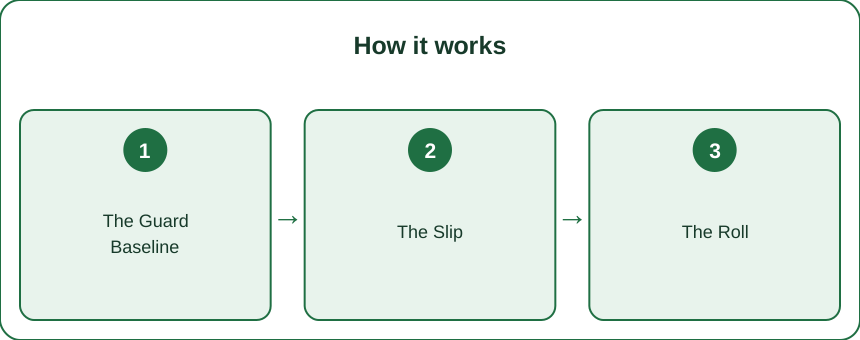
Quick Answer: Three defensive fundamentals cover most of it: the guard (hands at cheekbones, elbows in, chin tucked), the slip (a small 6-inch diagonal head movement off the center line), and the roll (bend the knees and trace a U under the punch). Adding them to shadowboxing roughly doubles the workout, because your legs and core work continuously instead of resting between punches.
Every beginner boxing class is punch-heavy. Jab, cross, hook, repeat, and again next week.
Defense waits politely in chapter two, which most people never open.
Which is a shame, because the slip, the roll, and the guard are half the sport, most of the footwork benefit, and — once you can actually do them — the more fun half. Chapter two, now open.

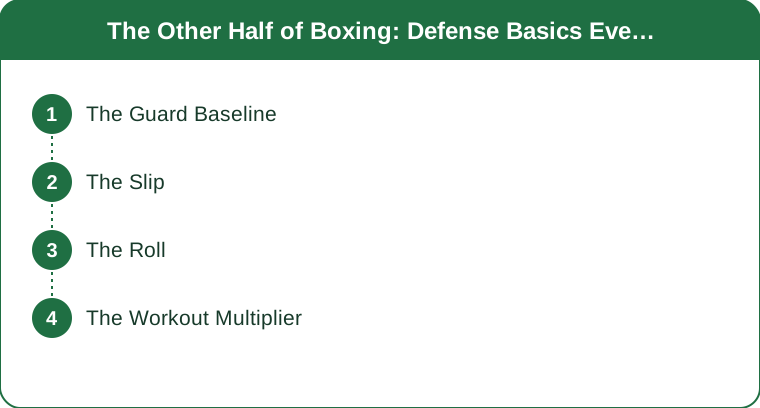
What is a proper boxing guard?
Boxing’s neutral position, and the thing every punch leaves from and returns to.
- Hands at cheekbone height, roughly at the sides of your face, not out in front where they block your vision.
- Elbows in, tucked toward the ribs. Flared elbows leave the body open and cost you leverage on every punch.
- Chin tucked down behind the front shoulder. A raised chin is the most exposed thing on a boxer.
- Shoulders slightly raised, front shoulder acting as a shield.
The universal beginner tell is the hand that drops and stays down after throwing. You punch, and the hand drifts back slowly at hip level, and for about a second you’re wide open.
The fix is the snap-back: the hand returns to the guard as fast as it left. Drill it deliberately — throw a jab, snap it home, check that your hand is at your cheekbone. Twenty slow reps of that is worth more than a hundred fast sloppy ones.
How do you slip a punch?
A small diagonal bend at the knees and waist that moves your head off the center line.
Emphasis on small. A slip is about six inches of movement — enough for a punch to pass by your ear. It is not a limbo, not a dramatic lean, and not a duck. Big slips leave you off balance and out of position to counter, which defeats the purpose.
The mechanics: bend slightly at the knees, shift weight diagonally, let your head travel a short distance to the outside. Your eyes stay on your target the entire time. Return to guard immediately.
Drill: slip left, slip right, to a beat. Two minutes. It trains obliques, balance, and timing all at once — the core workout hiding in the defense chapter that nobody assigns.

How do you roll under a punch?
The under-the-punch escape, used against hooks rather than straight shots.
Bend your knees, trace a U-shape with your head — down, across, and up on the other side — and come back up in guard on the opposite side. Your head passes under where the hook is traveling.
Critical detail: the legs do the work, not the waist. Bending at the waist to duck drops your eyes off your opponent and puts you in a terrible position. The roll is essentially a small squat with a lateral shift.
Which is also why shadowboxing rolls burn your legs like squats with a plot. Do 20 rolls in a row and your quads will file a complaint.
Slip-slip-roll to music is the classic defensive rhythm drill. Three minutes of it and you’ll understand why boxers talk about defense as dancing with consequences.
Why does defense double your workout?
Because it removes the rest.
In punch-only shadowboxing, there’s an unavoidable pause between combinations while you reset. Add slips and rolls into those gaps and your legs and core are working continuously for the full three minutes — no idle time.
The structure that works: three-minute rounds, one minute rest, alternating punch combinations with defensive movement. Jab-cross, slip right, jab, roll, jab-cross-hook, slip left. Keep moving through the whole round.
Three or four rounds of that is a genuinely complete boxing workout — cardio, legs, core, shoulders — and it requires zero equipment beyond a bit of floor space and some commitment. Wear something you can rotate and squat in freely; defensive movement involves far more hip and knee bend than most people expect, so squat-proof leggings or proper shorts beat anything that rides up.
5 Mistakes Everyone Makes
- Slipping too big. Six inches, not a full lean. Oversized slips destroy your balance and leave you unable to counter.
- Bending at the waist to roll. Legs do it. Waist-bending drops your eyes and puts your head somewhere you can’t defend it.
- Closing your eyes. Extremely common and completely instinctive. Practicing slowly in front of a mirror is the only real cure — you have to see the punch to slip it.
- Dropping the hand that isn’t working. During a slip, both hands stay home. The non-punching hand goes on holiday for most beginners.
- Only practicing defense standing still. Add a step in each direction. Real defense combines head movement with footwork, and drilling them separately forever means they never merge.
FAQ
What are the basic boxing defense techniques?
The core four are the guard (hands up at cheekbones, elbows in, chin tucked), the slip (a small diagonal head movement off the center line), the roll (bending the knees to travel under a hook), and the parry (deflecting a punch with the palm). Beginners get the most from mastering the guard and the slip first.
Can you learn boxing defense without a partner?
Yes, for the fundamentals. Shadowboxing in front of a mirror builds the guard, slip, and roll mechanics, and drilling them to a beat develops rhythm and conditioning. Timing against a real punch eventually needs a partner or a coach, but the movement patterns are built solo.
How do I stop dropping my hands when I punch?
Drill the snap-back deliberately and slowly — throw one punch, return the hand to your cheekbone at the same speed it left, and check it in a mirror. Twenty slow correct reps beat a hundred fast sloppy ones. Filming a round is the fastest way to see how often it’s actually happening.
TL;DR:
- Guard: hands at cheekbones, elbows in, chin tucked. Every punch returns to it — drill the snap-back.
- Slip: a small 6-inch diagonal move off the center line, eyes up, not a lean.
- Roll: bend the knees, trace a U under the hook, legs doing the work.
- Slip-slip-roll to a beat is the classic rhythm drill.
- Adding defense to shadowboxing removes the rest gaps and roughly doubles the intensity.
- Three-minute rounds mixing combinations with movement, no equipment needed.
Keep Reading
This article is for general informational and styling purposes only. Fit, sizing, and product availability may vary.